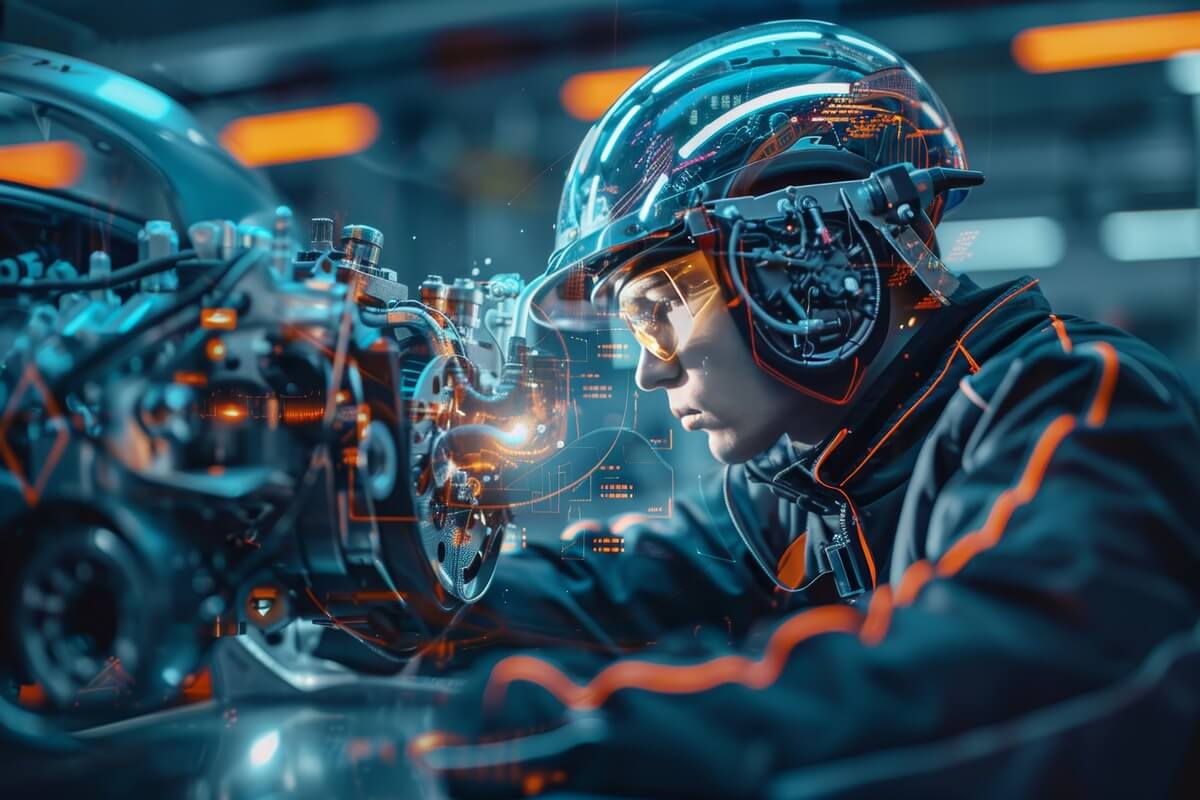
Discover the forefront of engineering advancements with expert commentaries and analyses by Endego’s seasoned professionals. Delve into subjects from automotive intricacies and cybersecurity challenges to sustainable innovations and design frontiers. Stay informed, stay inspired — explore with us.
As the industry moves toward sustainable mobility, internal combustion engines (ICEs) are advancing to meet strict environmental standards and remain competitive with electric powertrains. Car manufacturers use a range of internal technologies that help reduce emissions and ensure the ongoing relevance of ICEs in a low-emission future.
Read moreThe basis of the most commonly performed nonlinear FEM analyses in CAE software is the theory of plasticity. How did this theory originate? In which fields is it applied? What are the benefits of using plasticity-based calculations, and what are the prospects for the development of simulations that incorporate plasticity?
Read moreIf you think about car… is it complicated? Chassy, wheels, engine, gearbox, stereo, air condition and you’re good to go. Well, cars are not so simple anymore. Automotive business evolved, and cars are no longer only about driving, it’s about how you spend you’re time during driving and of course – safety.
Read moreThe future of rail transport is inextricably linked to environmentally friendly technologies. According to many experts, hydrogen trains are to become one of the cornerstones of modern railways. How do Polish companies fare in terms of the advancement of work on the application of hydrogen in the railways? Can hydrogen trains revolutionise rail transport in our country and around the world?
Read moreThe idea of sustainability and a focus on ecology determine the direction in which modern public transport is heading. The hydrogen bus is an innovative means of transport that fits perfectly into the standards that modern public transport should meet. On the streets of Polish and foreign cities, it is increasingly common to see these low-emission vehicles, which not only quickly become a functional element of public transport, but also provide a range of benefits in other areas, including contributing to improved air quality in the locality. Along with their electric counterparts, hydrogen buses are expected to become an integral part of the urban landscape within the next few years. What makes such high hopes for them?
Read moreOver the years, the industrial design of cars has involved the addition of safety systems designed to provide an even higher level of protection for users and other road users. Some of these solutions, in line with regulations adopted by the European Commission, are becoming required equipment for new cars in order for them to receive the appropriate type-approval for sale in the European Union. Which modern car safety systems are worth paying particular attention to?
Read moreAltair Technology Conference 2024 was held in Krakow, Poland, on May 23-24. The event attracted nearly 140 participants, making it one of the largest meetings of the numerical computing industry in Poland. The success of this edition was influenced by both the content of the event and its unique atmosphere.
Read moreProfessional crash tests are one of the important elements of the process of introducing new car models to the market. They allow, under controlled conditions, to verify how a vehicle will behave under the influence of various impacts, analogous to those occurring during dangerous incidents on the road. Currently, car crash tests, also known as crash-tests, are an obligation of car manufacturers wishing to introduce new vehicles for sale. The results of such tests determine whether a car will meet established crash standards, and thus be allowed to be used in a given country. Along with the development of crash test technology comes developments in the area of materials to improve vehicle safety and durability. The approach of auto manufacturers to the car design process is also evolving.
Read moreProfesjonalne testy zderzeniowe są jednym z istotnych elementów procesu wdrażania nowych modeli samochodów na rynek. Pozwalają one w kontrolowanych warunkach zweryfikować to, jak pojazd będzie zachowywać się pod wpływem różnego rodzaju oddziaływań, analogicznych do tych, występujących podczas niebezpiecznych zdarzeń na drodze. Obecnie testy zderzeniowe samochodów, określane również mianem crash-testów, są obowiązkiem producentów aut pragnących wprowadzić do sprzedaży nowe pojazdy. Od wyników takich testów zależy, czy dany samochód spełni ustalone normy zderzeniowe, a co za tym idzie – będzie mógł być dopuszczony do użytku na terenie danego kraju. Wraz z rozwojem technologii testów zderzeniowych idzie w parze rozwój w obszarze materiałów mających na celu poprawę bezpieczeństwa i wytrzymałości pojazdów. Ewoluuje również podejście producentów aut do procesu projektowania samochodu.
Read more